
Beginner's Guide to Urban Exploration: Complete 2026
Beginner's Guide to Urban Exploration: Complete 2026
Urban exploration—often called urbex by enthusiasts—has exploded in popularity over the last decade. This complete guide will walk you through everything a beginner needs to know about urban exploration in 2026, from essential preparation and safety to legal considerations and community best practices.
What is Urban Exploration?
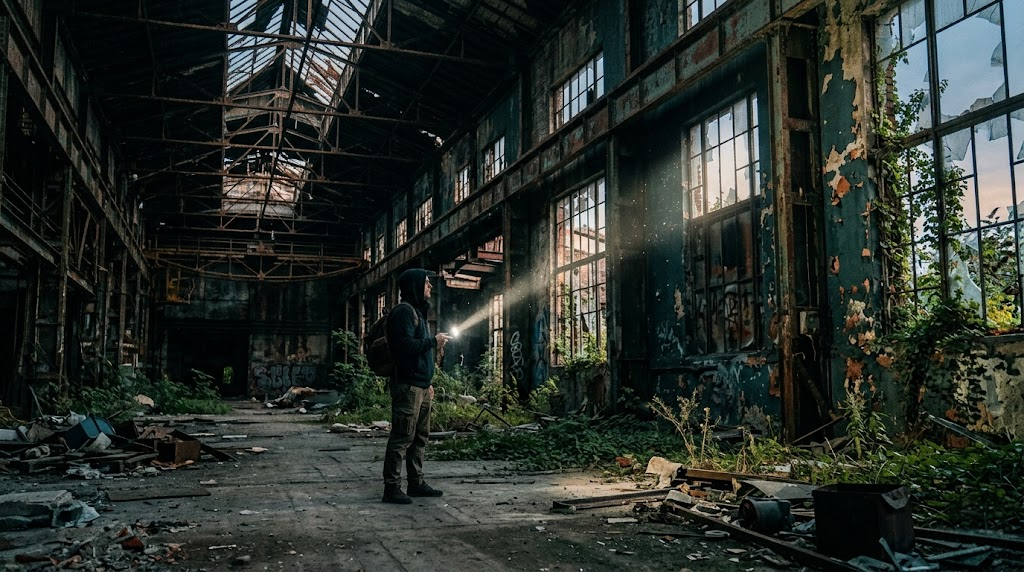
Urban exploration is the practice of investigating man-made structures and areas that are often abandoned, forgotten, or off-limits to the general public. This might include derelict hospitals with decades of medical equipment, ghost towns, forgotten subway tunnels, crumbling factories with rusting machinery, or decaying mansions reclaimed by nature.
What makes urban exploration different from simple sightseeing is the commitment to responsible discovery and documentation. Urbexers respect locations and follow an unwritten code: observe, document, and leave everything as you found it. This isn't treasure hunting or vandalism—it's about respectful observation.
Essential Gear & Preparation
Flashlight or Headlamp: Non-negotiable. LED headlamps cost €15–€30.
Sturdy Boots: Work boots with reinforced soles and ankle support.
Work Gloves: Tetanus protection. €5–€10.
Dust Mask or Respirator: For asbestos and mold protection. €20–€50.
First Aid Kit: Bandages, antiseptic, pain relief, elastic bandage.
Phone Charger: Your lifeline. 10,000 mAh power bank.
Camera: Smartphone is ideal.
Notebook: Pencil works even when wet.
Never Explore Alone
Always bring at least one companion, ideally two. If someone gets injured, one stays while the other gets help.
Safety Tips & Risks
Structural Hazards: Test every step. If a floor sags or feels soft, back out immediately.
Biological Hazards: Mold causes respiratory infections. Asbestos can cause cancer. Always wear a respirator.
Chemical Hazards: Old labs and factories may contain residual chemicals. Never touch unknown substances.
Getting Lost: Mark your path with chalk. Take photos. Use landmarks.
Legal Considerations
Entering private property without permission is trespassing—illegal in most countries. Fines range €100–€1,000+. If there's a 'No Trespassing' sign, don't enter. Contact property owners and ask permission (many say yes).
How to Find Locations
Google Earth: Reveals abandoned buildings and structures.
Forums & Databases: Urban exploration sites document locations (verify independently).
Local Knowledge: Ask farmers, shopkeepers, old-timers.
Community Groups: Join urbex groups on Facebook, Instagram, or Reddit.
UrbexVault Location Library: Browse verified locations by country to discover abandoned places in your region. Purchase individual locations with GPS coordinates, detailed descriptions, and community reviews. Or explore map bundles for complete country coverage at better value.
First Steps & Beginner Tips
Step 1: Start Small — Choose a safe location like a small cottage.
Step 2: Daytime First — Always explore during daylight for your first 3-5 visits.
Step 3: Go With Companions — Never solo. Bring trusted people.
Step 4: Respect the Space — Don't vandalize, steal, or damage. Leave as you found it.
Step 5: Document Responsibly — Take photos for preservation, but don't share new discoveries publicly.
Step 6: Connect With Community — Join urbex groups. Experienced explorers mentor newcomers.
Step 7: Learn From Each Trip — Reflect on what worked. Keep notes.
Common Beginner Mistakes to Avoid
- Going alone
- Exploring without research
- Ignoring signs of structural danger
- Not wearing protective equipment
- Oversharing locations online
- Trespassing on active properties
- Exploring in poor weather
- Going too fast
- Touching everything
- Forgetting your exit
The Urbex Community
Urbexers are thoughtful, respectful, and passionate about history and preservation. Getting connected with experienced explorers accelerates your learning and keeps you safe.
The Ethics of Urban Exploration
Respect for Property: Don't damage, steal, or leave traces.
Respect for History: Treat abandoned spaces as historical sites.
Discretion: Not every location should be shared publicly.
Preservation: Document what you find—you're creating a historical record.
Safety First: Don't take unnecessary risks.
Conclusion
Urban exploration is an incredible way to connect with history, discover hidden stories, and appreciate architectural heritage. It demands respect—for locations, history, property owners, yourself, and your companions. It's not a game or social media stunt. It's responsible historical documentation.
The abandoned buildings in your region are waiting to tell their stories. With the right preparation, mindset, and community, you're ready to listen.
Ready to start exploring? Browse UrbexVault map bundles for complete country coverage—GPS coordinates, difficulty ratings, and community reviews all in one comprehensive package. Or explore individual locations by country to build your own custom collection.