
Urbex Fotografie-Guide: So machst du atemberaubende Fotos verlassener Orte
Why Urbex Photography is Unique
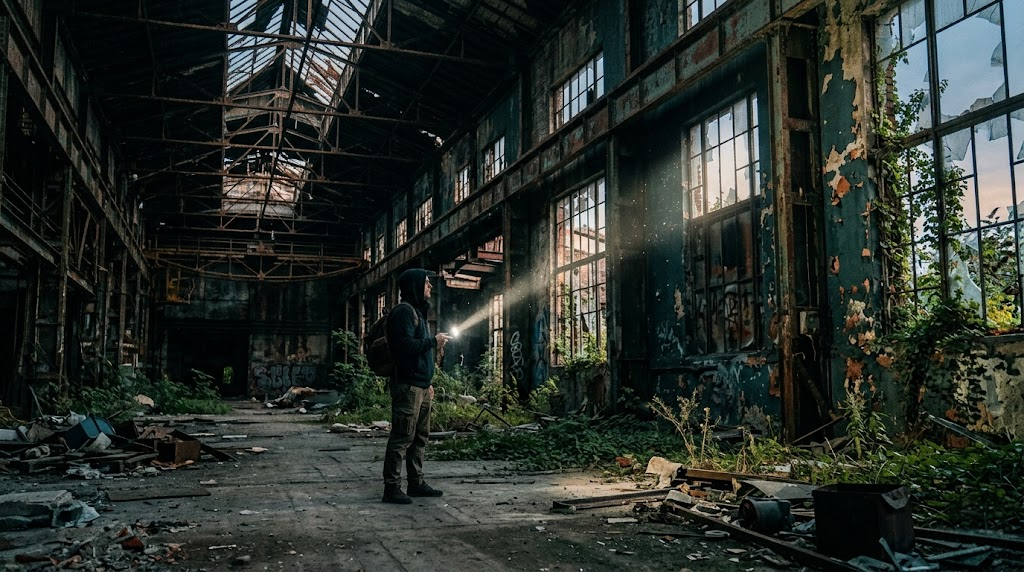
Abandoned places offer some of the most dramatic and atmospheric photography opportunities you'll ever encounter. Peeling paint, overgrown corridors, broken windows casting light beams through dust — these scenes practically compose themselves. But capturing them well requires specific techniques.
Essential Camera Gear for Urbex
Camera Body
Any modern camera works, but you'll benefit from good low-light performance. Full-frame sensors excel in dark interiors. If you're using a phone, the latest iPhones and Samsung Galaxy models have excellent night modes.
Must-Have Lenses
- Wide-angle (14-24mm) — Essential for capturing grand interiors, hallways, and the scale of abandoned buildings
- Standard zoom (24-70mm) — Versatile for details and medium shots
- Fast prime (35mm or 50mm f/1.8) — Perfect for low-light situations and atmospheric bokeh
Accessories
- Tripod — Non-negotiable for long exposures in dark buildings
- Headlamp — Keeps your hands free while navigating dark spaces
- Extra batteries — Cold abandoned buildings drain batteries faster
- Lens cloth — Dusty environments are tough on glass
Camera Settings for Abandoned Buildings
The Low-Light Challenge
Most abandoned buildings are dark. Windows may be boarded up, electricity is gone, and interiors can be cavernous. Here's how to handle it:
- ISO 800-3200 — Don't be afraid to push it. Modern cameras handle noise well
- Aperture f/2.8-f/8 — Wider for low light, narrower when you have window light
- Shutter speed: use a tripod — Exposures of 1-5 seconds are common. This is why a tripod is essential
- Shoot RAW — You'll want maximum flexibility in post-processing
Light Beam Magic
The most iconic urbex photos feature dramatic light beams through broken windows or holes in the roof. To capture these:
- Visit in the morning or late afternoon when sun angle is low
- Look for dust particles in the air — they make beams visible
- Expose for the highlights, not the shadows
- Use a small aperture (f/11-f/16) for defined sun stars
Composition Techniques
Lead the Eye
Abandoned corridors, staircases, and hallways create natural leading lines. Position yourself at one end and let the architecture guide the viewer's eye through the frame.
Include Scale
Abandoned buildings are often massive, but photos can flatten that sense of scale. Include a human figure (or yourself with a timer) to show just how enormous these spaces are.
Details Matter
Don't just shoot wide. The peeling paint texture, a forgotten shoe, a clock stopped at a specific time — these details tell stories that wide shots can't.
Symmetry and Decay
Many abandoned buildings have beautiful symmetrical architecture that contrasts dramatically with asymmetrical decay. Use this contrast for powerful compositions.
Post-Processing Tips
- Bring up shadows — Recover detail in dark areas without blowing highlights
- Desaturate slightly — The classic moody urbex look uses muted tones
- Add clarity/texture — Emphasize the gritty textures of decay
- Dodge and burn — Guide attention to your focal point
- Don't over-HDR — The "HDR urbex" look of the 2010s is dated. Keep it natural
Safety While Shooting
Photography in abandoned places comes with real risks:
- Never enter alone — always bring a buddy
- Test floors before stepping (especially upper levels)
- Watch for asbestos, broken glass, and unstable structures
- Wear sturdy boots and consider a dust mask
- Tell someone where you're going and when you expect to return
Finding Photogenic Locations
The best urbex photography locations share common traits: dramatic architecture, good light sources, varied textures, and interesting decay patterns. Use UrbexVault's free map to find verified locations with photos from other explorers — you'll know what to expect before you visit.
Ready to find your next shoot? Browse our database of 7,500+ abandoned locations with GPS coordinates and community photos.